
Design Thinking Executive Programme
Find the courses details here.
Design Thinking Executive Programme
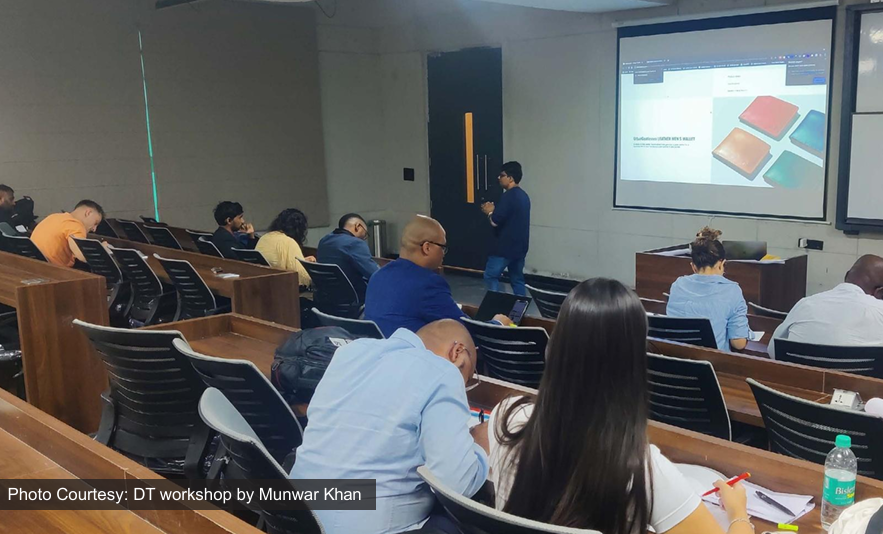
What is DESIGN THINKING? and Why CORPORATE LEADERS should practice it?
Design thinking revolutionizes the corporate landscape with its unique, people-focused approach to problem-solving. It enables leaders to drive innovation, adaptability, and foster a culture of leadership and business growth by centering on the needs of their customers and teams.This methodology breaks traditional barriers, allowing leaders to navigate uncertainties with creativity. It leads to better products, services, and processes, fostering a culture of effective and purposeful problem-solving in businesses.
Course Fee
₹80,000 (18% GST additional)
Duration
3 Days + Follow-up Session
Mode
In-person
Enhances Problem-Solving Skills
Design Thinking fosters outside-the-box thinking, enabling leaders to find innovative solutions to complex problems.
Encourages Creativity and Innovation
By its nature, Design Thinking is a non-linear, iterative process that encourages creative thought and experimentation.
Improves Team Collaboration
It involves collaborative work processes, which can improve communication and teamwork within an organization.
Make Better Decisions
Design Thinking guides leaders to base decisions on evidence through testing and iterating ideas, reducing costly mistakes and aligning choices with the company's best interests.
Strategic Advantage
In an increasingly competitive business world, companies that practice Design Thinking are more likely to innovate successfully, giving them a strategic edge.
Facilitates Organizational Change
It can be a powerful tool for driving change within an organization, as it challenges traditional thought processes and encourages new ways of looking at problems.
Drives Business Growth
Innovations and improved customer experiences stemming from Design Thinking can significantly enhance business growth and competitiveness.
Details
Course Information
Duration: 3 Days + Follow-up Sessions
Mode: In-person
Price: ₹80,000 + GST
For Whom
- Senior leaders & C-suite — strengthen innovation leadership and strategy.
- Team leads & managers — embed creative practices into processes & culture.
- Product, R&D & growth teams — develop customer-centric new products and solutions.
- Marketing & UX professionals — apply design thinking for strategic innovation.
- Aspiring entrepreneurs & consultants — build and launch impactful ventures.
Purpose And Objectives
- Industry–Academia collaboration — foster partnerships for joint projects and knowledge exchange.
- Executive training programs — deliver design thinking modules for professionals & academics.
- Awareness initiatives — organize events to spread principles, methods, and best practices.
- Content & case studies — produce authentic materials showcasing design thinking impact.
- Digital hub & practitioner network — share tools, resources, and connect with experts.